

1050 Aluminum
| Parameter | Specification |
|---|---|
| Alloy | 1050 Aluminum |
| Product Type | Sheet, Plate, Coil, Strip, Foil, Circle/Disc |
| Temper | O, H12, H14, H16, H18, H24, H26, etc. |
| Thickness | 0.1–500 mm |
| Width | 10–2,650 mm |
| Surface Treatment | Anodizing, Embossing, Mirror, Brushed, PVDF Coating |
| Standards | ASTM B209, ASTM B210, EN 573, EN 485 |
What is 1050 Aluminum
1050 Aluminum is a commercially pure aluminum alloy with a minimum aluminum content of about 99.5%. It belongs to the 1xxx series and is known for its excellent corrosion resistance, high electrical and thermal conductivity, good formability, and weldability.
Compared with stronger heat-treatable alloys, 1050 Aluminum offers relatively low strength but provides excellent ductility and workability. It is commonly supplied as sheet, plate, coil, strip, foil, and aluminum circle/disc.
Types of 1050 Aluminum Huawei Supply
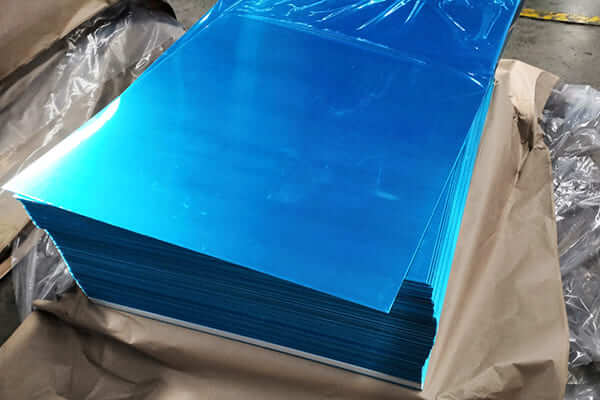
Aluminum Sheet/Plate
Thickness: 0.2–500 mm
Temper: O, H12, H14, H16, H18, H24
Width: 100–2,650 mm
Length: Customized
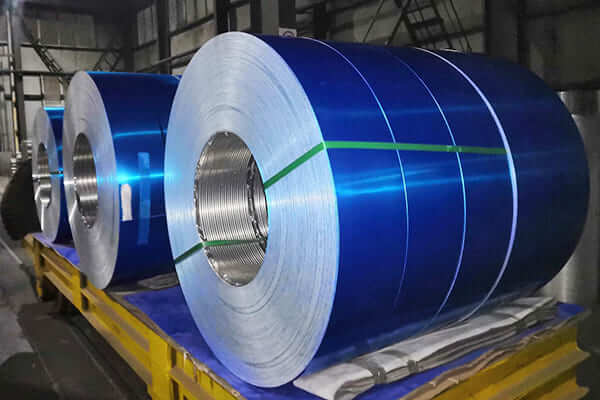
Aluminum Coil
Thickness: 0.1–6.0 mm
Width: 10–2,650 mm
Coil ID: 76, 152 mm
Coil Weight: Customized
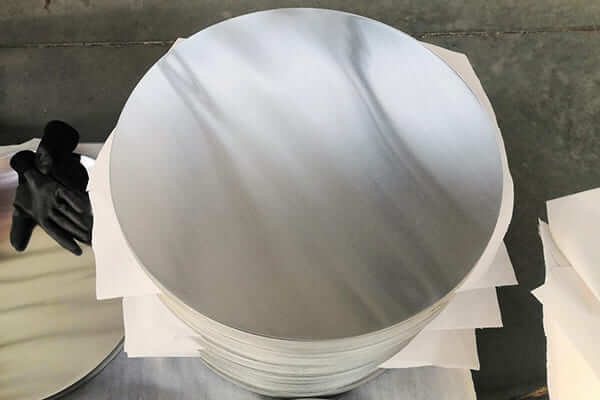
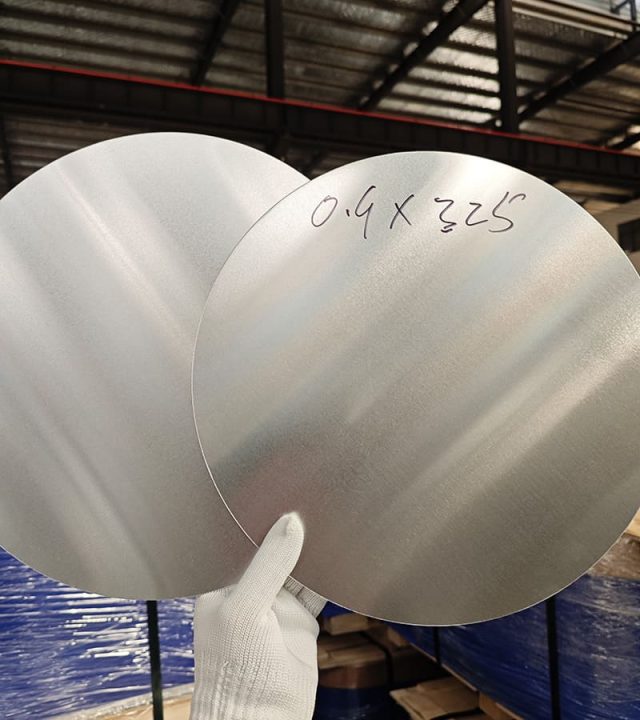
Aluminum Circle/Disc
Temper: O, H12, H14, H18
Thickness: 0.5–6.0 mm
Diameter: 50–1,200 mm
Edge: Smooth, Burr-Free
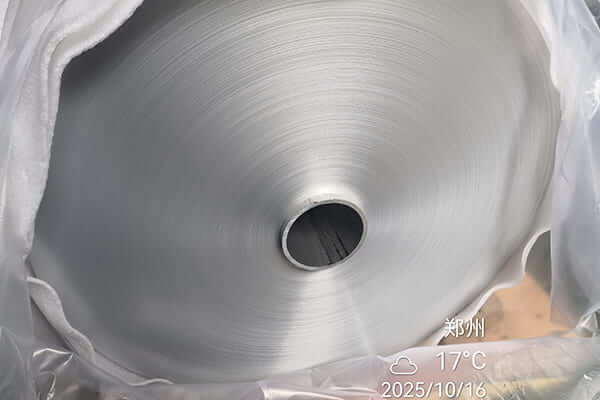
Aluminum Foil/Strip
Temper: O, H12, H14, H18
Thickness: 0.006–0.20 mm
Width: 10–1,650 mm
Coil ID: 25, 76, 152 mm
1050 Aluminum Chemical Composition (Max. wt.%)
| Element | Si | Fe | Cu | Mn | Mg | Cr | Zn | Ti | V | Other Each | Al |
|---|---|---|---|---|---|---|---|---|---|---|---|
| Content (%) | 0.25 | 0.40 | 0.05 | 0.05 | 0.05 | — | 0.05 | 0.03 | — | 0.03 | 99.50 min. |
1050 Aluminum Physical Properties
Density
2.71 g/cm³
Melting Range
646–657°C
Thermal Conductivity
~222 W/m·K
Electrical Conductivity
~61% IACS
Coefficient of Thermal Expansion
~23.6 × 10⁻⁶ /K
Elastic Modulus
~69 GPa
Poisson's Ratio
~0.33
Specific Heat Capacity
~900 J/kg·K
Get Your Free Consultation
Contact us for expert advice on 1060 Aluminum products, specifications, and applications. Share your requirements, and our team will provide a suitable solution and competitive quotation.
1050 Aluminum Mechanical Properties With Diffirent Tempers
| Temper | Tensile Strength (MPa) | Yield Strength (MPa) | Elongation (%) | Typical Condition |
|---|---|---|---|---|
| O | 65–95 | ≥20 | ≥25 | Annealed, soft |
| H12 | 75–105 | ≥55 | ≥20 | 1/4 hard |
| H14 | 95–125 | ≥75 | ≥10 | 1/2 hard |
| H16 | 115–145 | ≥95 | ≥5 | 3/4 hard |
| H18 | ≥125 | ≥105 | ≥3 | Full hard |
| H24 | 95–125 | ≥75 | ≥10 | Strain hardened and partially annealed |
| H26 | 115–145 | ≥95 | ≥5 | Strain hardened and partially annealed |
Key Properties of 1050 Aluminum
Excellent Electrical Conductivity
Its high conductivity makes it suitable for electrical and conductive components.
Good Weldability
1050 Aluminum can be readily welded using common aluminum welding processes.
High Thermal Conductivity
1050 Aluminum transfers heat efficiently, supporting heat-transfer and thermal-management applications.
Lightweight
With a density of approximately 2.71 g/cm³, it provides a favorable strength-to-weight balance for many applications.
Excellent Corrosion Resistance
Its natural oxide layer provides strong resistance to atmospheric corrosion.
Good Surface Finishing
It can undergo anodizing, polishing, brushing, embossing, and coating to achieve different functional or decorative surfaces.
Excellent Formability
The soft O temper offers excellent ductility, while H tempers provide higher strength for applications requiring greater rigidity.
Non-Heat-Treatable
Its strength mainly comes from cold working, with different H tempers providing different mechanical properties.
Common Surface Treatment of 1050 Aluminum
Anodizing
Anodizing forms a protective oxide layer that improves corrosion resistance, surface hardness, and appearance. It is suitable for decorative and architectural applications.
Polishing
Polishing smooths the aluminum surface and creates a bright, clean finish. It is commonly used for decorative parts and reflective components.
Brushing
Brushing creates a uniform linear texture on the surface, providing a modern appearance while reducing the visibility of minor scratches and marks.
Coating
Coating adds a protective or decorative layer to improve weather resistance, corrosion protection, and color durability. Common options include PVDF and powder coating.
Embossing
Embossing creates a textured surface that improves appearance and surface durability while concealing minor imperfections.
Perforating
Perforating creates precisely arranged holes for ventilation, filtration, light transmission, and weight reduction.
Typical Applications of 1050 Aluminum
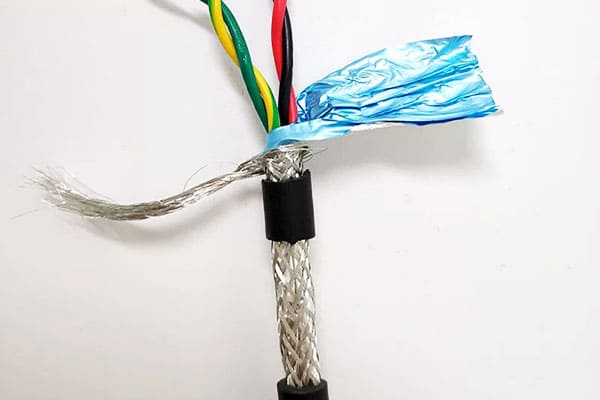
Electrical Components
1050 Aluminum offers high electrical conductivity, making it suitable for:
- Electrical conductors
- Transformer components
- Busbars
- Wiring and conductive parts
- Electrical panels
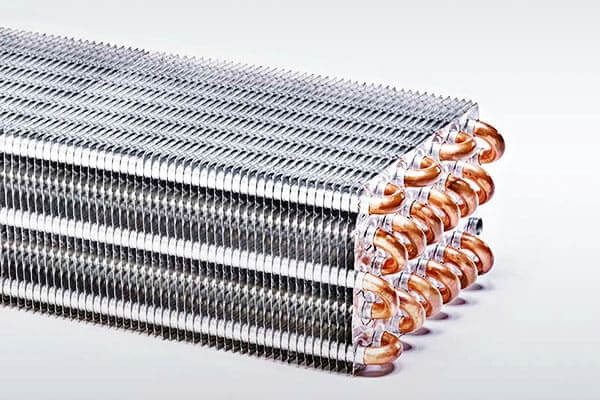
Heat Transfer
Its high thermal conductivity supports efficient heat transfer in:
- Heat exchangers
- Radiator components
- Cooling equipment
- Heat sinks
- Thermal insulation systems
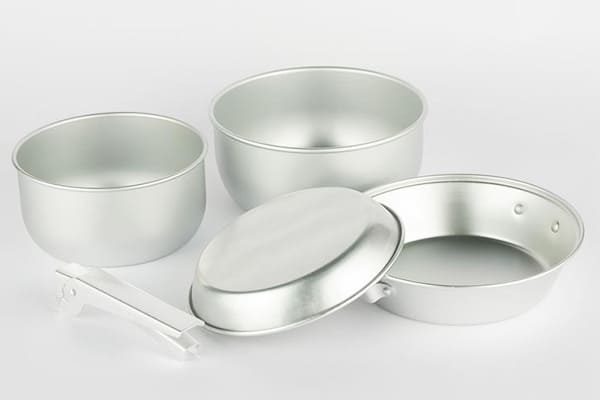
Kitchenware and Household
The excellent formability of 1050 Aluminum makes it suitable for:
- Cookware
- Kitchen utensils
- Food containers
- Household aluminum foil
Lighting and Reflectors
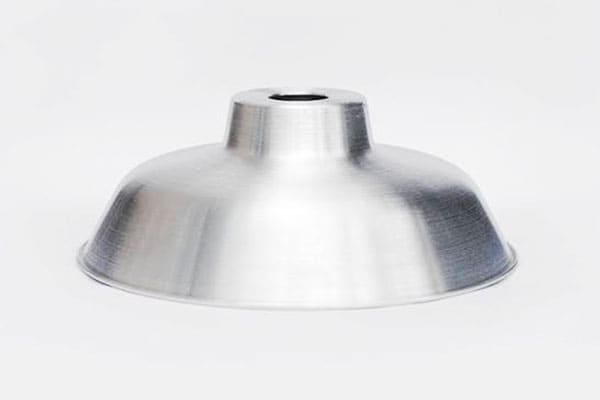
Its bright surface and good reflectivity are useful for lighting reflectors, lamps, solar reflectors, and decorative components.
- Lighting reflectors
- Lamp shades
- LED lighting components
- Decorative lighting panels
Chemical and Industrial Equipment
Its corrosion resistance supports applications such as:
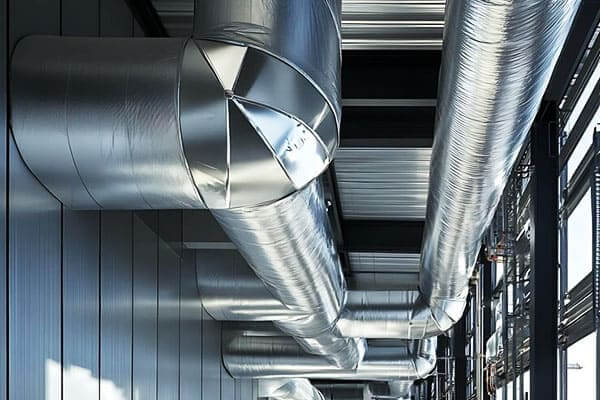
- Chemical processing equipment
- Storage tanks
- Piping components
- Industrial containers
Building and Decorative
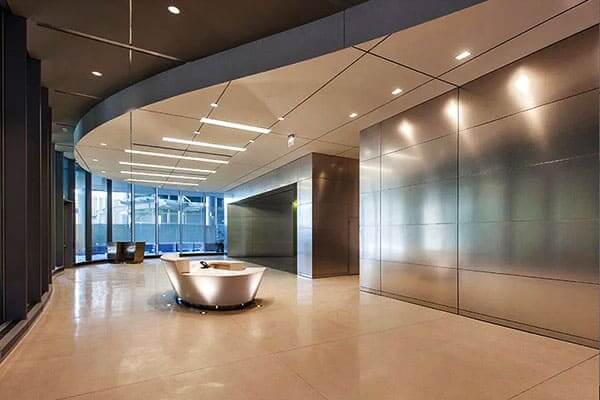
1050 Aluminum can be anodized, brushed, embossed, or coated for:
- Interior wall panels
- Decorative panels
- Ceiling materials
- Signboards
- Architectural components
Packaging Applications
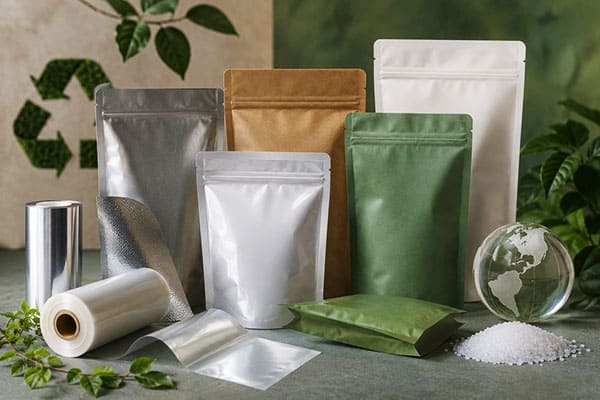
1050 Aluminum is also used for:
- Packaging components
- Aluminum foil
- Nameplates
- General sheet-metal fabrication
- Deep-drawn products
Standards and Certifications
| Standard | Main Scope | Application to 1050 Aluminum |
|---|---|---|
| ASTM B209/B209M | Aluminum and aluminum-alloy sheet, coiled sheet, and plate | 1050 Sheet, Plate, Coil |
| EN 573-3 | Chemical composition of wrought aluminum alloys | EN AW-1050A / Al 99.5 |
| EN 485-1 | Technical conditions for inspection and delivery | 1050 Sheet, Strip, Plate |
| EN 485-2 | Mechanical properties | 1050 Sheet, Strip, Plate |
| EN 485-4 | Shape and dimensional tolerances for cold-rolled products | 1050 Sheet, Strip, Plate |
| ISO 6361-1 | Technical conditions for inspection and delivery | 1050 Sheet, Strip, Plate |
| ISO 6361-2 | Mechanical properties | 1050 Sheet, Strip, Plate |
| ISO 6361-3 | Dimensional tolerances for strips | 1050 Aluminum Strip |
| ISO 6361-4 | Shape and dimensional tolerances for sheets and plates | 1050 Sheet, Plate |
| ISO 6361-5 | Chemical composition | 1050 Aluminum |
| GB/T 3880.1-2023 | General delivery requirements for aluminum plates, sheets, and strips | 1050 Sheet, Plate, Strip |
| GB/T 3880.2-2024 | Mechanical properties | 1050 Sheet, Plate, Strip |
| GB/T 3880.3-2024 | Dimensional tolerances | 1050 Sheet, Plate, Strip |
Reliable Aluminum Supply Backed by Quality & Expertise
From strict quality control to global export experience and professional technical support, Huawei Aluminum provides dependable solutions for customers worldwide.
Strict Quality Control
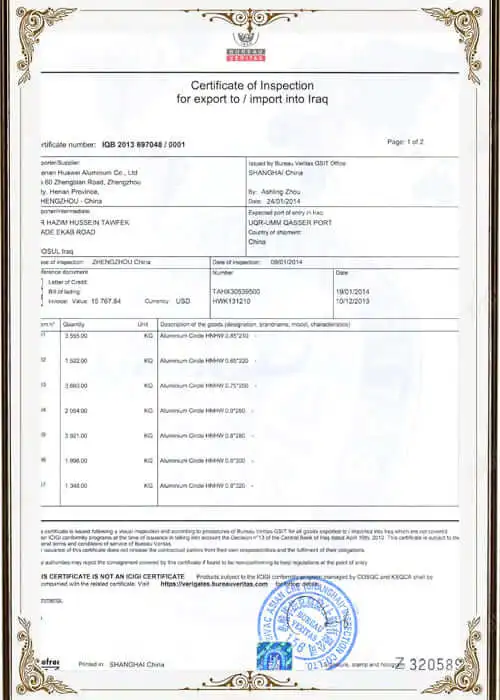
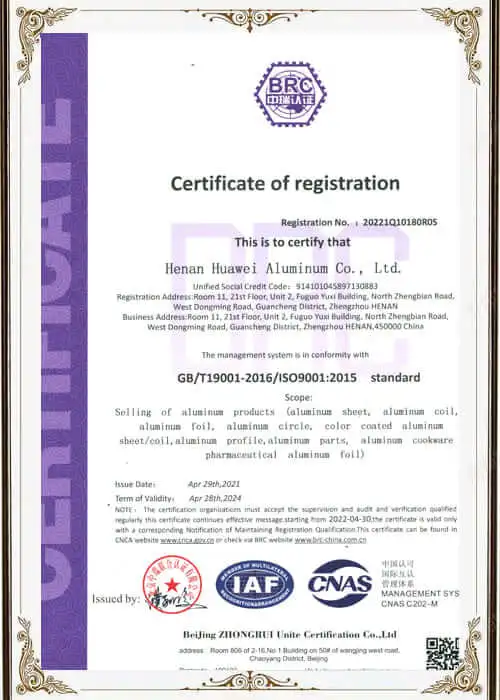
Huawei Aluminum checks chemical composition, dimensions, mechanical properties, and surface quality throughout production. ISO certification and third-party inspection are also available.
Global Export Experience
With more than 20 years of industry experience and products supplied to 72 countries, Huawei Aluminum supports reliable international supply and logistics.
Professional Technical Support
Our technical team provides guidance on alloy, temper, dimensions, surface finish, packaging, and application requirements to help customers select the right aluminum product.
1050 Aluminum vs Other Aluminum Alloys
| Property | 1050 Aluminum | 1060 Aluminum | 1100 Aluminum | 3003 Aluminum | 5052 Aluminum | 6061-T6 Aluminum |
|---|---|---|---|---|---|---|
| Al Content (min.) | 99.50% | 99.60% | 99.00% | Balance | Balance | Balance |
| Main Alloying Element | — | — | Cu 0.05–0.20% | Mn 1.0–1.5% | Mg 2.2–2.8%, Cr 0.15–0.35% | Mg 0.8–1.2%, Si 0.4–0.8% |
| Tensile Strength, Typical | ~78 MPa* | ~70 MPa* | — | ~110 MPa* | ~260 MPa* | ~310 MPa* |
| Yield Strength, Typical | ~34 MPa* | ~30 MPa* | — | ~40 MPa* | ~215 MPa* | ~275 MPa* |
| Elongation, Typical | ~40%* | ~43%* | — | ~30%* | ~10%* | ~12%* |
| Electrical Conductivity | ~61% IACS | ~61% IACS | ~59% IACS | ~50% IACS | ~35% IACS | ~43% IACS |
| Heat Treatable | No | No | No | No | No | Yes |
| Formability | Excellent | Excellent | Excellent | Very Good | Good | Good |
| Corrosion Resistance | Excellent | Excellent | Excellent | Excellent | Excellent | Good |
| Typical Strength Level | Low | Low | Low | Medium | High | High |
FAQs
1050 Aluminum is a commercially pure aluminum alloy containing at least 99.5% aluminum. It offers excellent formability, corrosion resistance, electrical conductivity, and thermal conductivity.
No. 1050 Aluminum is non-heat-treatable. Its strength increases through cold working, with common tempers including O, H12, H14, H16, H18, H24, and H26.
1050 Aluminum is commonly used for electrical conductors, heat exchangers, food and pharmaceutical containers, chemical equipment, cable sheathing, reflectors, and general sheet-metal fabrication.
Yes. Its high aluminum purity provides excellent ductility and formability, especially in soft tempers such as O. It is suitable for bending, drawing, and other forming operations.
Yes. 1050 Aluminum provides very good corrosion resistance, making it suitable for many industrial, chemical, food, and outdoor applications.
Yes. 1050 Aluminum has good weldability, brazing performance, and finishing characteristics, making it suitable for fabricated components.
1050 Aluminum can be supplied as sheet, plate, coil, strip, foil, and circle/disc, with customized dimensions and tempers available according to application requirements.
Both are commercially pure aluminum alloys. 1050 contains at least 99.5% aluminum, while 1060 generally contains at least 99.6% aluminum. The higher purity of 1060 can provide slightly higher conductivity, while 1050 remains a widely used choice for general electrical, thermal, and fabrication applications.
Yes. 1050 Aluminum can undergo anodizing, polishing, brushing, embossing, and coating. Its high purity also provides a clean surface suitable for reflective applications.
Yes. Henan Huawei Aluminum Co., Ltd. can supply 1050 Aluminum in customized alloy temper, thickness, width, length, surface finish, and product form to meet different application and fabrication requirements.
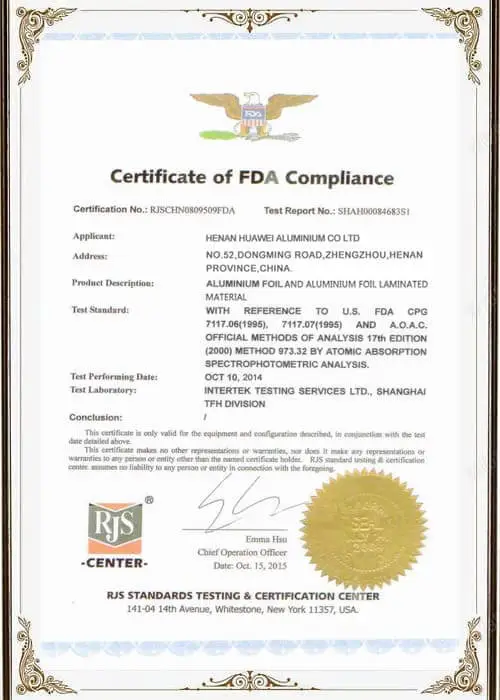
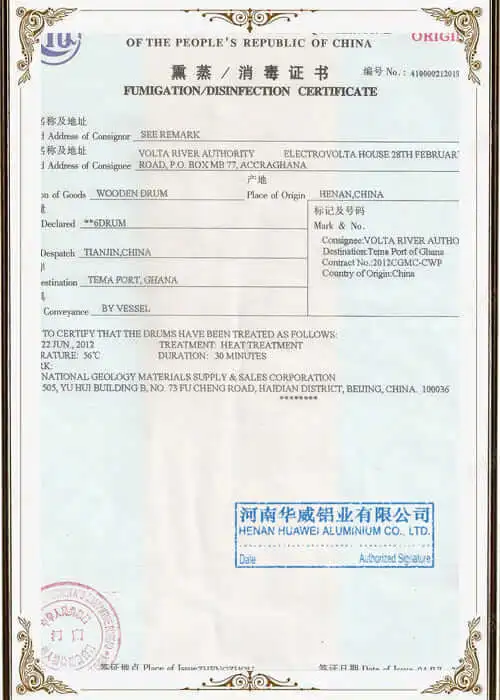
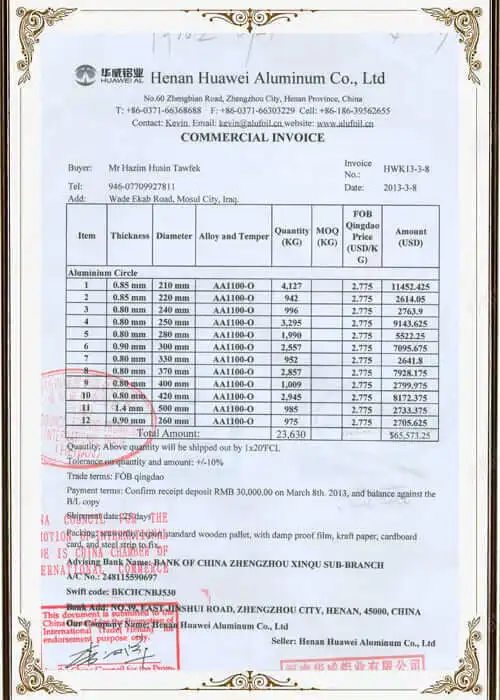
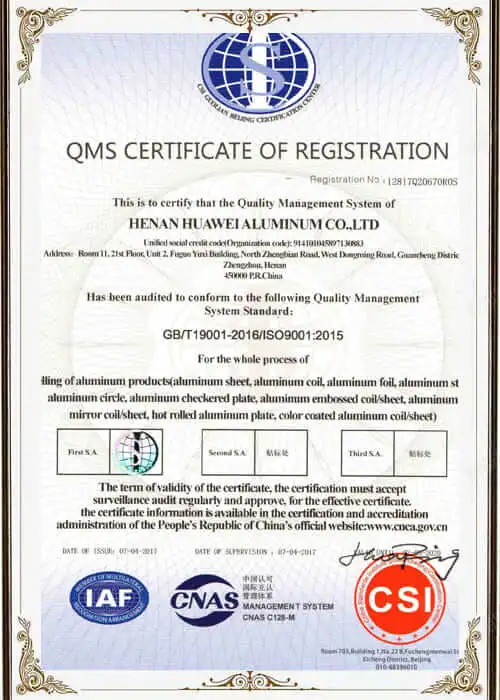
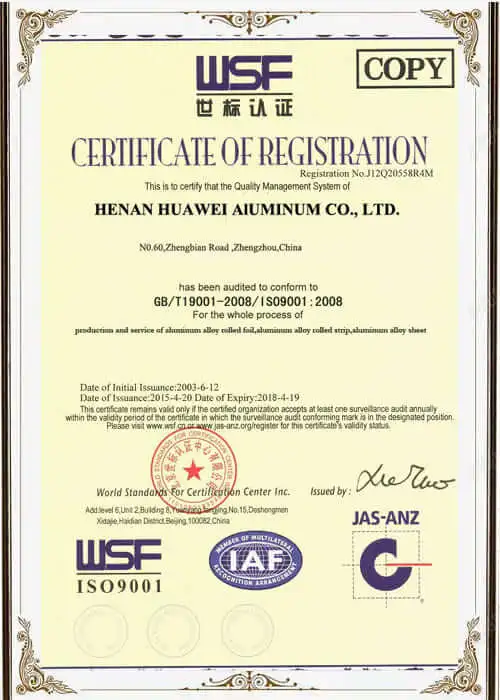
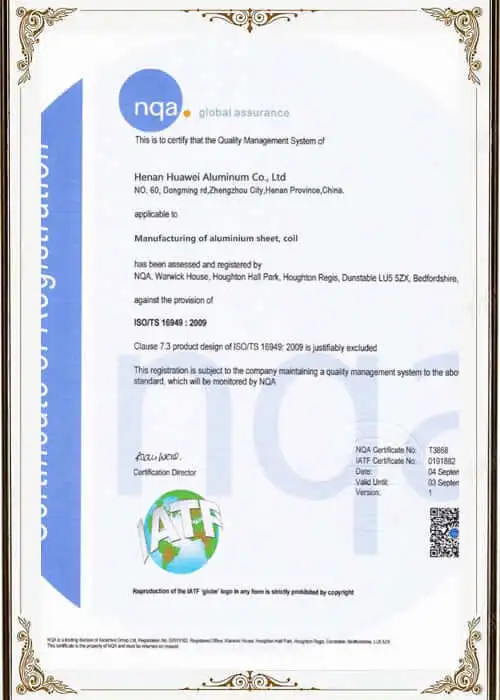
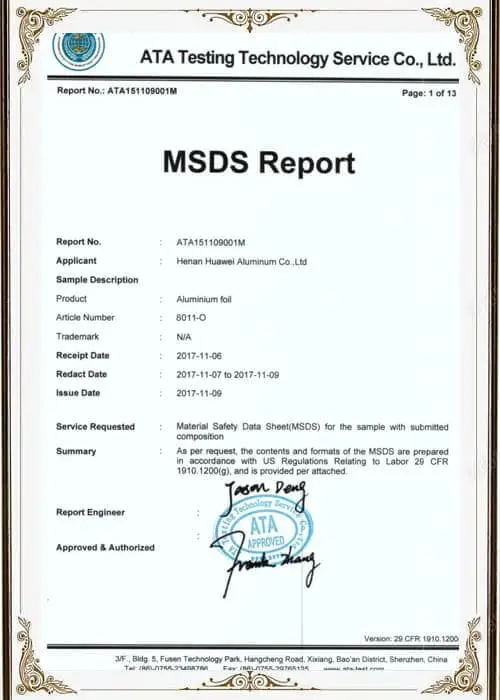
Certificates
Huawei Aluminum has been deeply involved in the rolled aluminum alloy industry for many years and has obtained a variety of certifications.
Get In Touch
- ADD: No.52, Dongming Road, Zhengzhou, Henan, China
- TEL: +86 18137782032
- EMAIL: sales@hwalu.com
- Whatsapp: +8618137782032